
Introduction
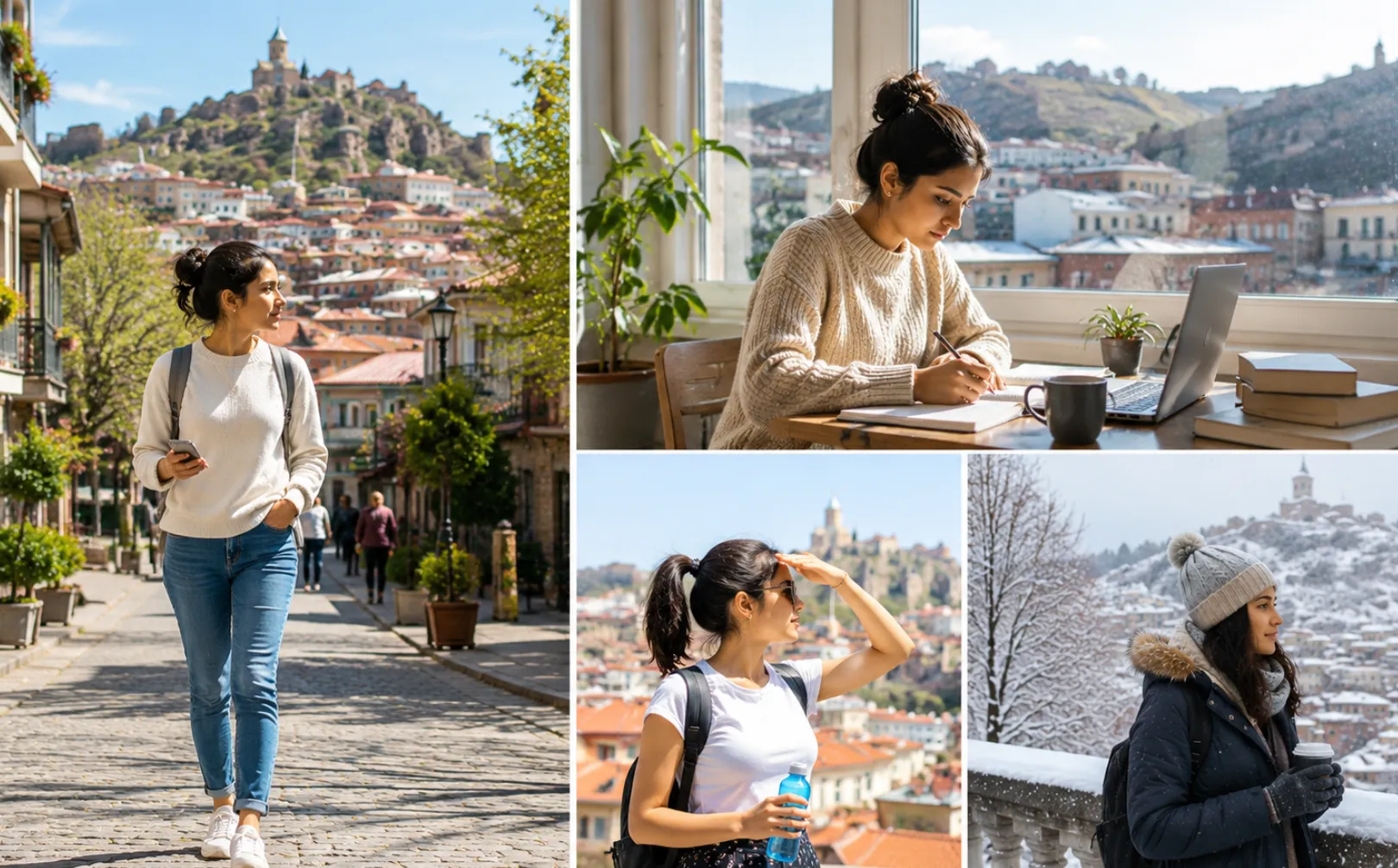
If you are planning to study medicine abroad, you must check the fees, universities, hostel options, food, and eligibility. But there is one practical question that many Indian students ask only at the last minute, and that is, “Will I be able to adjust to the weather in Georgia?”
The answer is yes, but you should know what to expect before you land there.
Georgia has four clear seasons. Summers can feel warm and pleasant, winters can be cold, and the weather can change drastically depending on whether you reside in Tbilisi, Batumi, Kutaisi, or a higher mountain region. For Indian students who are used to the hot summers and mild winters, this Georgia climate guide will help you prepare better for studying, travel, clothing, health, and daily living in Georgia.
Understanding the Weather in Georgia Before Medical School
he weather in Georgia is not the same across the whole country. Georgia sits between the Black Sea and the Caucasus Mountains, so the climate changes from one region to another significantly. Western Georgia generally has a more humid climate because of the Black Sea, while eastern Georgia is on the drier side.
This matters because many students who opt for MBBS in Georgia live in cities like Tbilisi, Kutaisi, Batumi, and nearby student areas. A student living in Batumi may experience more rain and humidity, while a student in Tbilisi may experience drier summers and colder winter nights.
Georgia also has a proper seasonal pattern. That makes it different from many parts of India, where the weather may feel mostly hot, humid, or monsoon-driven for most of the year.
How Does Each Season Feel for the Indian Students?
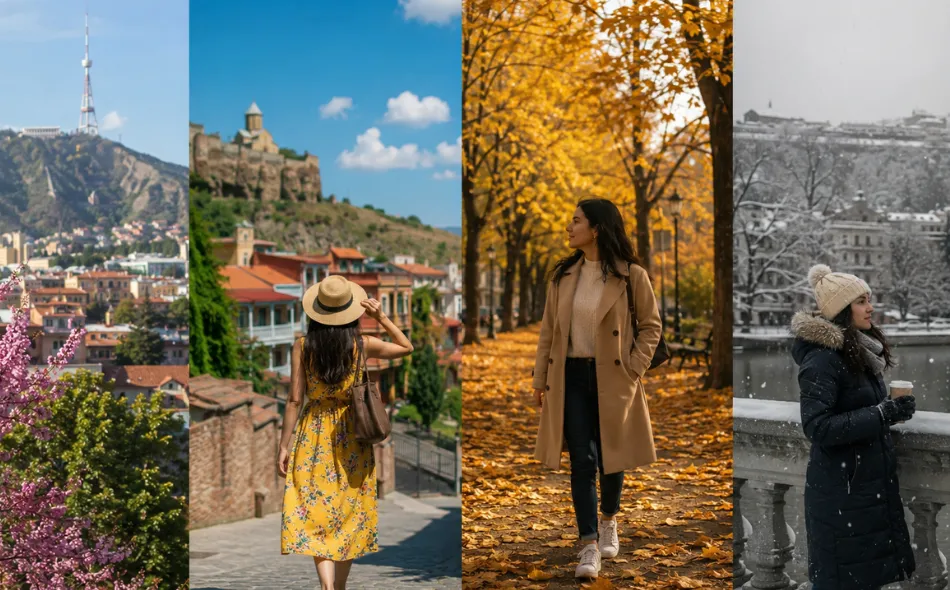
Spring is one of the earliest seasons for Indian students to adjust to. The weather in Georgia during the spring months is generally mild, and the students can move around comfortably. Light jackets, hoodies, and regular shoes will be more than sufficient for most days.
Summers, on the other hand, can feel familiar to the Indian students, especially those from North India. But summers in Georgia are less intense compared to peak Indian summers. Tbilisi can get hot in July and August, but the heat is often drier than in coastal Indian cities. This makes it easier to manage with water, light cotton clothes, sunscreen, and a cap.
Fall is often the most comfortable season for the students. The weather in Georgia becomes cooler, the air starts feeling fresh, and the days are still manageable for college, shopping, and weekend travel.
Lastly, winters require the most preparation. It may not be extreme in every city, but it is much colder than what many Indian students are used to. Good jackets, thermals, gloves, warm socks, and waterproof shoes can become important. Students should also learn how heating works in their hostel and apartment before the colder months begin.
Tbilisi, Batumi, and Kutaisi: Why the Choice of City Matters
A good Georgian guide should not give only one answer for the entire country. The city you choose can change your daily comfort level to a great extent. Medical universities and student hostels are located in urban areas, so city-wise weather awareness will be much more useful than the general country-level information.
For students planning for their MBBS in Georgia, Tbilisi is often one of the most discussed cities, as it has the majority of the institutions, services, and student communities. Still, it is mandatory for the students to carefully check the exact university location before comparing weather conditions.
What Should Indian Students Pack for Georgia’s Climate?
Packing for the weather in Georgia is about balance. There is no need for you to carry your entire wardrobe from India, but you should bring essentials for the first few weeks. Winter items can be easily bought after arrival, but basic warm clothing should be packed in advance. Students can also explore MBBS scholarships in Georgia to understand available financial support before planning their studies.
How Does the Climate Affect Your Daily Living in Georgia?
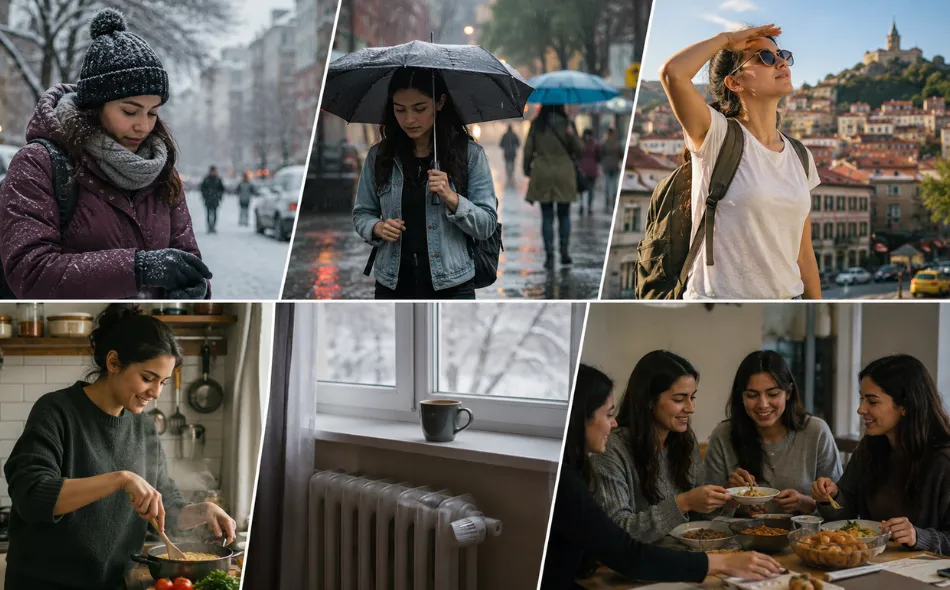
Daily living in Georgia is manageable for Indian students, but the climate can hamper your small routines. In winter, students may need more time to dress, commute, and walk carefully on wet or icy surfaces. In the rainy season, laundry may take longer to dry. In the summer, students may require sunscreen and hydration, especially when walking around the city.
Food habits can also change slightly. Indian students often prefer warm meals, soups, teas, and simple home-cooked food during the winter months. Grocery stores, Indian food options, and shared kitchens can make the transition smoother, especially in cities with a large student population.
Heating is another vital point. Before choosing a hostel or an apartment, students should also ask about room heating, hot water, insulation, and electricity costs. A cheaper room may not feel comfortable if it cannot stay warm during winter.
This is why the weather in Georgia should be an important part of your accommodation decision and not just your packing list.
Why Climate Awareness Matters Before Choosing a University?
Many Indian families focus on tuition fees, admission timelines, and university recognition. These are important, but daily comfort is important too. A student who understands the weather in Georgia can easily plan their clothing, budget, healthcare, accommodation, and travel more practically.
Georgia has also become a well-known destination for Indian students. Reports on international education trends have listed Georgia among the most popular destinations for Indian students in recent years. Therefore, this makes practical information about climate, lifestyle, and student comfort even more useful for the families comparing medical education options.
A well-defined Georgia climate guide will also help the students to move with fewer surprises. It will also help the parents to understand that living in Georgia is not about dealing with extreme conditions every day. It is more about being prepared for seasonal changes.
Wrapping Up
The climate in Georgia may vary from that in India, yet it is not very hard to cope with. Indian students willing to join medical schools will find no difficulty if they understand the seasons, pack the right clothes, and make practical choices about housing and daily routine.
For those who think about pursuing MBBS in Georgia, climate should be considered as part of your preparations and not a challenge at all. Summers are usually manageable, spring and fall are pleasant, and winter becomes comfortable with proper clothing and heated accommodation.
In case you are evaluating universities, then consider looking beyond the tuition costs and time of application. Consider the city you will be residing in, accommodation, heating, support available, and other local living conditions. Understanding safety in Georgia can also help you prepare better for your daily life and travel. Some advance planning before you leave will make your stay in Georgia easier and much more comfortable.